
10 ways the RTCH Can be Beneficial to the Rail Industry
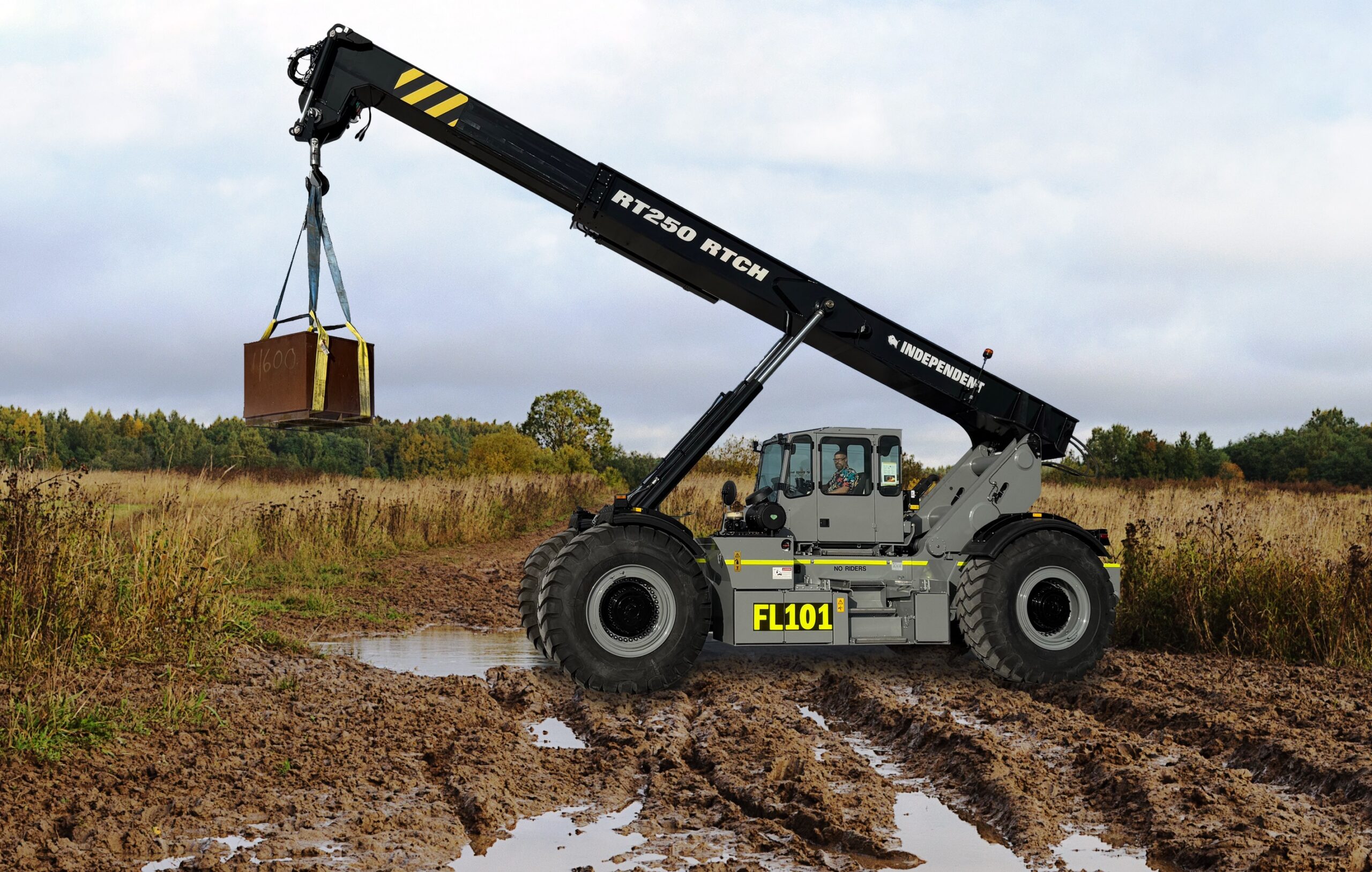
Meeting the Demands of Modern Rail Operations
Rail operations are evolving. With increasing pressure to move cargo efficiently, reduce downtime, and operate in remote or undeveloped environments, the need for adaptable equipment has never been greater.
The Rough Terrain Container Handler (RTCH) is designed to meet these challenges head-on combining lifting capability, mobility, and durability into one solution. Here are 10 ways the RTCH benefits rail operations.
- Operates Beyond the Rail Yard
Not all rail work happens in paved terminals. The RTCH allows operators to handle containers in:
- Remote rail spurs
- Temporary job sites
- Unpaved or undeveloped areas
- Reduces Dependence on Fixed Infrastructure
Traditional rail operations rely heavily on established yards and cranes. The RTCH enables container handling without permanent infrastructure bringing flexibility to where it’s needed most.
- Improves Mobility Across the Jobsite
Rail environments often require moving between multiple points. With the RTCH, operators can:
- Reposition quickly
- Access hard-to-reach areas
- Maintain workflow without delays
- Handles Heavy Container Loads Efficiently
The RTCH is built specifically for container handling, providing:
- High lifting capacity
- Stable operation
- Reliable performance under load
- Adapts to Changing Terrain Conditions
Rail projects often face:
- Mud
- Gravel
- Uneven surfaces
The RTCH is designed to perform consistently across these conditions.
- Reduces Downtime
Equipment failure or delays can disrupt entire rail operations. The RTCH’s durable design helps:
- Minimize unexpected breakdowns
- Maintain operational continuity
- Keep projects on schedule
- Supports Faster Turnaround Times
In rail operations, speed matters. The RTCH enables:
- Faster container handling
- Reduced wait times
- Improved overall efficiency
- Consolidates Equipment Needs
Instead of relying on multiple machines (forklifts, cranes, support vehicles), the RTCH can handle multiple roles reducing complexity and cost.
- Enhances Operational Flexibility
Rail environments are dynamic. The RTCH allows operators to:
- Adjust to changing jobsite demands
- Scale operations up or down
- Maintain productivity in unpredictable conditions
- Built for Real-World Rail Environments
The RTCH isn’t designed for ideal conditions it’s built for real ones. From remote locations to demanding workloads, it delivers the reliability rail operations depend on.
See the difference RTCH can make in your operations. Reach out today to learn more.