
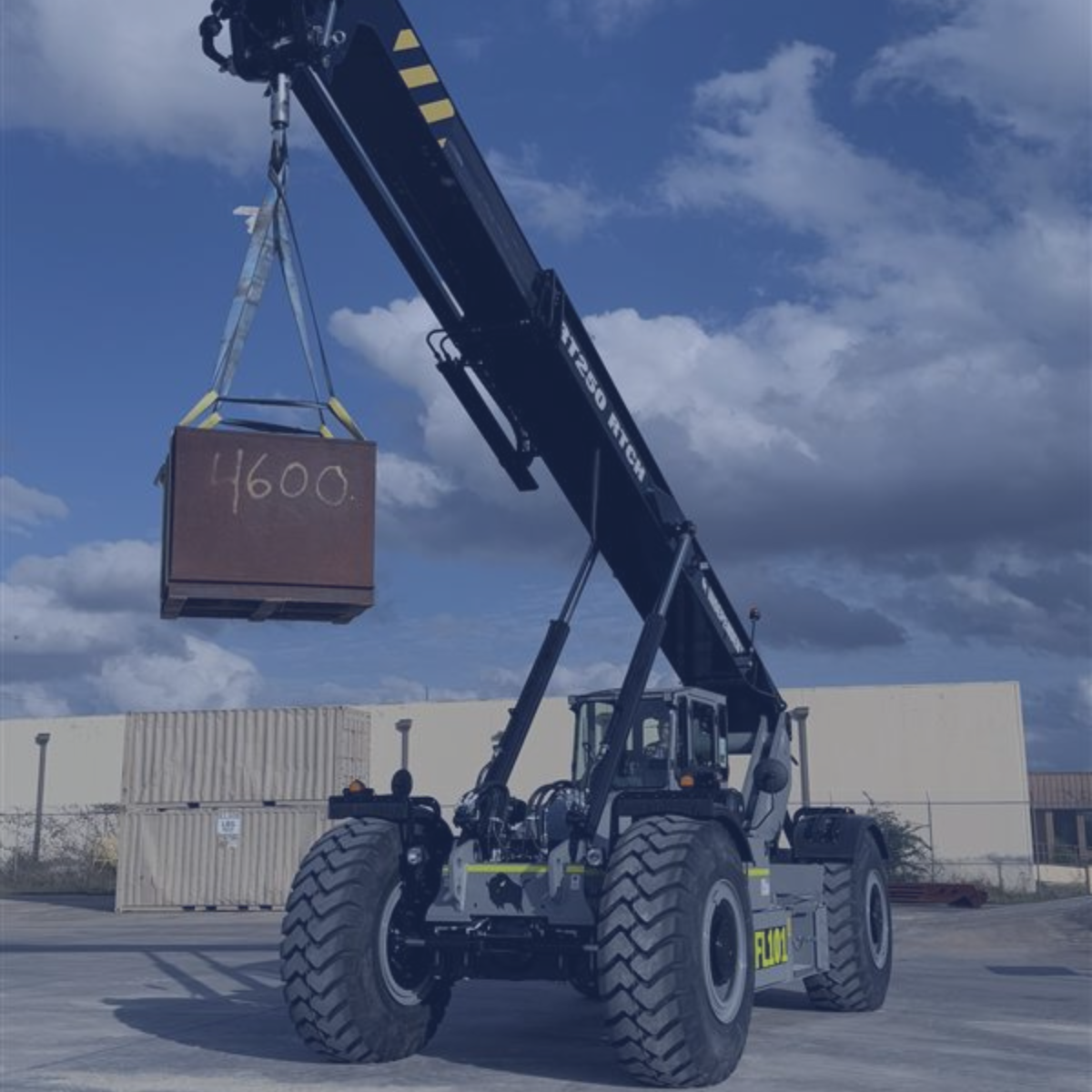
A Rough Terrain Container Handler (RTCH) is designed to move heavy containers across challenging terrain, but its capabilities extend far beyond container handling alone. With the right RTCH attachment, operators can adapt to a wide range of material handling tasks, giving organizations greater flexibility while maximizing the value of their fleet.
Whether supporting military logistics, industrial operations, ports, rail yards, or remote job sites, RTCH attachments allow one machine to perform multiple jobs without the need for additional specialized equipment.
Why RTCH Attachments Matter
Every operation has unique lifting and handling requirements. While standard container handling remains the primary function of an RTCH, attachments make it possible to safely handle different types of loads while improving efficiency and reducing unnecessary equipment costs.
Instead of relying on multiple machines, operators can change attachments to meet changing operational needs. This flexibility helps increase productivity, improve equipment utilization, and reduce downtime.
Forklift Attachment
The forklift attachment transforms an RTCH into a heavy-duty forklift capable of handling palletized materials, oversized cargo, and other non-container loads.
This attachment is ideal for operations that require both container handling and traditional material movement, allowing organizations to accomplish more with a single machine.
Sling Lift Attachment
Conventional container handling methods cannot safely lift some loads. The sling lift attachment allows operators to safely move oversized, irregular, or specialized cargo that requires lifting straps or rigging.
This provides additional versatility when handling equipment, construction materials, or mission-specific cargo.
Hook Attachment
The hook attachment expands lifting capabilities by allowing operators to move suspended loads that require a secure hook connection.
This attachment supports a variety of industrial and military lifting applications while maintaining the stability and lifting power expected from an RTCH.
Tool Carrier Attachment
The tool carrier attachment increases operational flexibility by allowing the RTCH to support additional worksite functions beyond traditional container handling.
For organizations operating in demanding environments, this attachment helps maximize equipment utilization while reducing the need for additional specialized machines.
Benefits of Using RTCH Attachments
Adding attachments to an RTCH provides several operational advantages, including:
- Increased equipment versatility
- Improved fleet utilization
- Reduced need for multiple specialized machines
- Greater operational flexibility
- Faster response to changing job requirements
- Lower long-term operating costs
- Improved productivity across diverse work environments
By adapting one machine for multiple applications, organizations can improve efficiency without significantly increasing fleet size.
Choosing the Right Attachment
Selecting the appropriate attachment depends on your workload, the materials you handle, and your operating environment.
Questions to consider include:
- What type of materials are being moved?
- Are loads containerized, palletized, or suspended?
- Will the RTCH support multiple applications throughout the year?
- Is maximizing equipment utilization a priority?
Understanding these requirements helps you configure your RTCH for both current and future operational needs.
Expanding the Capabilities of Your RTCH
An RTCH is already one of the most capable machines for operating in demanding environments. The addition of specialized attachments extends those capabilities even further, allowing a single machine to support a broader range of lifting and material handling applications.
From forklift attachments and sling lifts to hook systems and tool carriers, choosing the right attachment can improve operational efficiency, increase flexibility, and help organizations get the most from their RTCH investment.
As operational demands continue to evolve, versatile equipment solutions remain essential for maintaining productivity, supporting mission readiness, and maximizing long-term fleet performance.